
Training for the Great North Swim: What to expect in open water
Jenny UrwinIn 2024, I swam one mile at the Great North Swim. It was hard.
I had trained, but walking down to the shoreline, I was full of dread. The wind had picked up and for the first half mile I would be swimming straight into it. On any other day I would have sacked it off and had a gentle dip near the shore. But this was the Great North Swim, and I was swimming for a charity. So in I went.

In 2025, Katrina and I were manning the Warmcor stand at the event. No swimming for us that year, but it was clear that swimmers across the weekend were dealing with a full mix of weather conditions. At one point, a whole wave had to be brought out of the water due to thunder and lightning.
I’ll stop the doom and gloom, but it is worth saying. Conditions matter. No matter what distance you sign up for, your swim and your time will always be shaped by what the water and weather are doing on the day. It is something you need to consider when training.
In 2026 Warmcor will have a stand at the Great North Swim again, but this time I’ve also signed up to swim in the final 250m wave on the Sunday. If you’re in that wave, please do come and say hi.
Right! I’d better get training...
How your swimming changes over time
Rewinding a little, when I lived in Manchester I swam regularly with the Uswim sessions at Salford Quays. Each week I would comfortably swim around 750m, sometimes more in warmer weather. I was a swimmer. I was acclimatised to both the distance and the cold water.
Since moving back to Cumbria, I’ve slowly shifted into more of a dipper. Getting in, staying close to shore, and enjoying the sensation of the cold.
There is a real difference between the two. As a swimmer, you are working against both the cold and the physical effort. As a dipper, you are working with the cold itself. Both challenge your body, just in different ways. I was about to be reminded of that.
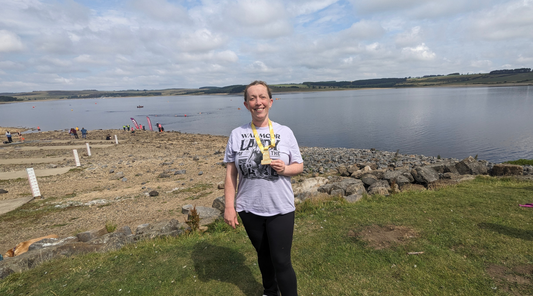
It’s Sunday morning and I’m back at Ullswater, meeting friends for a swim. I’m pleased to have a challenge again. My life can be quite sedentary, with a lot of time spent at a computer between my part-time job and Warmcor, so having something that gets me moving feels important.
My friend Vic has signed up for the mile. She’s been honest that it will be a challenge, especially as she mixes head up and head down breaststroke, and wants to bring in more front crawl than she’s used to.
We all have our own reasons for doing this, so don’t compare yours to someone else’s. They are all equally important.
We get in together to start training for our different distances.
Cold Water Swimming Conditions: 6 degree water at Ullswater
On the day, the air temperature was 7 degrees and the water was 6 degrees.
From the shore, I suggested to Vic that we stay close to the edge of the bay and see how far we could go, always with the understanding that we had to swim back. That part is important. There is no point pushing out for distance, getting cold, and then realising you still have to make it back, getting too cold and having the risk of hypothermia. No one wants that.
The conditions looked perfect. No wind. Calm water. But the water was fresh.
Pool vs Open Water Swimming: Why it feels harder
What we actually did was around 70 metres in 12 minutes.
And I got cold.
That deep, unmistakable cold where your skin starts to feel separate from your body. It’s an odd sensation, but a very clear signal that we had turned back at the right time. Possibly even a little later than we should have.
This is the key difference with open water training compared to pool training. You are not just training distance. You are training against the elements.
Vic shared her stats from the swim and compared them with a pool session the day before. What stood out was how much effort those 12 minutes took. We were burning more calories per minute than she had in a warm pool over an hour.

Another big difference is rest. In a pool, you can pause at the end of each length. You push off the wall and gain easy distance. You can reset.
In open water, once you are in, that’s it. The distance is yours to manage.
What to wear for cold water swim training
Because I knew I would be in for longer, I was mindful of what kit I needed. For this first training swim, this is what I wore:
- A silver-backed swimsuit to help retain warmth
- A shortie wetsuit. I tend to feel claustrophobic in full wetsuits, so this works better for me
- Thermal socks and gloves
- Water shoes for a more secure entry and exit
- A swim cap. I use a larger one from Suzanna Swims, which makes a big difference for comfort during the swim, with my large head!
- A tow float for visibility and somewhere to rest if needed
What to wear after a cold water swim
Getting dressed quickly after a swim, no matter the season, is a major part of the experience. Take too long and the cold can set in, increasing your risk of afterdrop.
Here is what I wear after a cold water swim:
- A fleece short-sleeve jumper
- Fleece joggers, these are super easy to pull on and keep your legs warm
- For layering, I rate M&S thermal tops
- A Changing Tube, always a good addition layer option for your torso or legs post swim
- A neckwarmer
- A cable knit bobble hat
- Mittens
- Aprés Swim British Wool socks
- A coat
Tips for training for the Great North Swim
If you are training for an open water event like the Great North Swim, there are a few things to keep in mind.
- Stay close to the shoreline where possible, so you always have an easy exit
- Listen to your body. Like REALLY listen
- Accept that distance in cold water is not the same as distance in a pool
And if that feels daunting going into an organised event, don’t worry.
Events like the Great North Swim are incredibly well supported. There are kayaks, boats, and safety teams nearby at all times. Other swimmers are also looking out for each other.
If you need a break, call a kayak over. Take a moment. Decide whether to continue or head back to shore.
There is absolutely no shame in that.
When I did my mile, I wrestled with the idea of needing help. People checked in on me. Others asked to be taken back. And the truth is, none of that takes away from what you are doing.
You are swimming for you.
Be safe. Listen to your body. Respect the conditions.
That is what gets you out of the water smiling.